
Menstrual blood cells – potential tool for future therapies and the advancement of female healthcare!

Menstrual blood, once considered merely waste, is now recognized as a valuable source of stem cells with the potential to revolutionize healthcare. These stem cells hold promise for pioneering advancements in medical treatments, offering hope for a brighter future in female healthcare and beyond.
What are periods/menstruation?

Periods, or menstruation is a natural process in which the lining of the uterus, known as the endometrium, sheds and is expelled from the body through the vagina. It typically occurs in females of reproductive age, usually once a month. Menstruation is part of the menstrual cycle, which is controlled by hormones and prepares the body for pregnancy.

During the menstrual cycle, the ovaries release an egg, which travels through the fallopian tubes. If the egg is not fertilized by sperm, the levels of estrogen and progesterone, two key hormones, drop. This drop in hormone levels triggers the shedding of the uterine lining, resulting in menstruation.

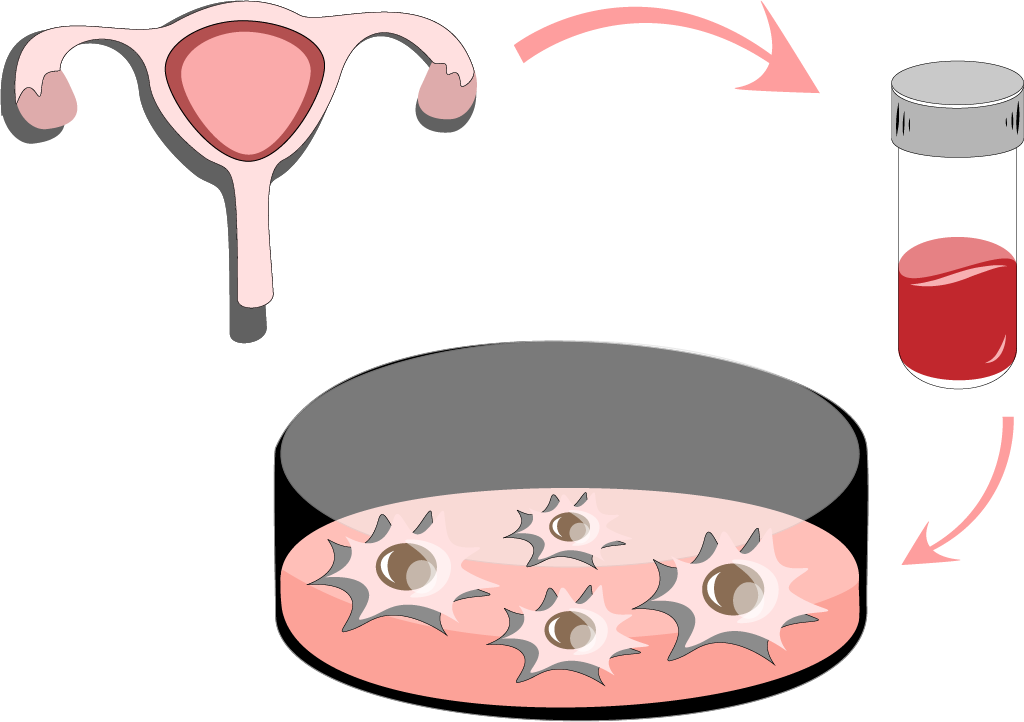
Menstrual blood, apart from the variety of proteins it contains, is is also enriched with cells of the immune system, exfoliated mucosa and stem cells. Menstrual blood-derived stem cells (MenSCs) were discovered by American scientists in 2007 and since then interest in the properties of these cells has been growing. Many scientists have noticed that MenSCs are capable of differentiating (transforming) into bone, cartilage, fat, liver, heart, and tissue cells, so they could be used to regenerate these tissues.

Why MenSCs?

MenSCs are easily isolated from menstrual blood and can be collected repeatedly and in relatively large quantities. In addition, the collection procedure is non-invasive. Therefore, menstrual blood has many advantages compared to other sources of stem cells. Most importantly, they hold a strong potential to regenerate different tissues, which have attracted attention for their potential use in regenerative medicine and clinical applications.

Read more…

They are considered multipotent, meaning they have the ability to differentiate into various cell types, including bone, fat, cartilage, and muscle cells.

Research suggests that menstrual blood-derived stem cells may have advantages over other types of stem cells, such as bone marrow-derived stem cells, including easier accessibility and higher proliferation rates. They also do not require invasive procedures for collection, as they are naturally shed from the body during menstruation.

In terms of clinical applications, menstrual blood-derived stem cells hold promise for treating various medical conditions and injuries. They have been studied for their potential in regenerating damaged tissues. Additionally, they may have potential applications in treating autoimmune diseases, cardiovascular disorders, and other conditions.

Overall, menstrual blood-derived stem cells represent an exciting area of research in regenerative medicine, with the potential to revolutionize medical treatments and improve patient outcomes. However, further research is needed to fully understand their capabilities and develop safe and effective therapies.

MenSCs paracrine effects and extracellular vesicles

MenSCs are biologically active cells and are rebuilding endometrium every month! By doing that, they release large amounts of different molecules, which are called “paracrine factors”, that stimulate other cells to grow, build extracellular matrix and regenerate tissue. These released molecules play a  significant role as co-stimulant for uterus and other tissues!

Read more…

MenSCs secrete angiogenic factors VEGF, HGF, ANG and MMP‐1 and pro‐inflammatory cytokines IL‐6, IL‐8 and IFN‐gamma, and most importantly, MenSCs were shown to be safe to transplant due to their low tumorgenicity. In simple words, they do not tend to become cancer cells. 

Paracrine effects of MenSCs were analysed in numerous studies and their effects were proposed being more superior than bone marrow stem cells. For instance, MenSCs paracrine factors possessed promising results in rat model of myocardial infarction by reducing apoptosis of cells and stimulation of endogenous regeneration.

Our team was also studying MenSCs paracrine effects and we demonstratedthe beneficial effects of their paracrine factors protecting cartilage tissue from degradation!

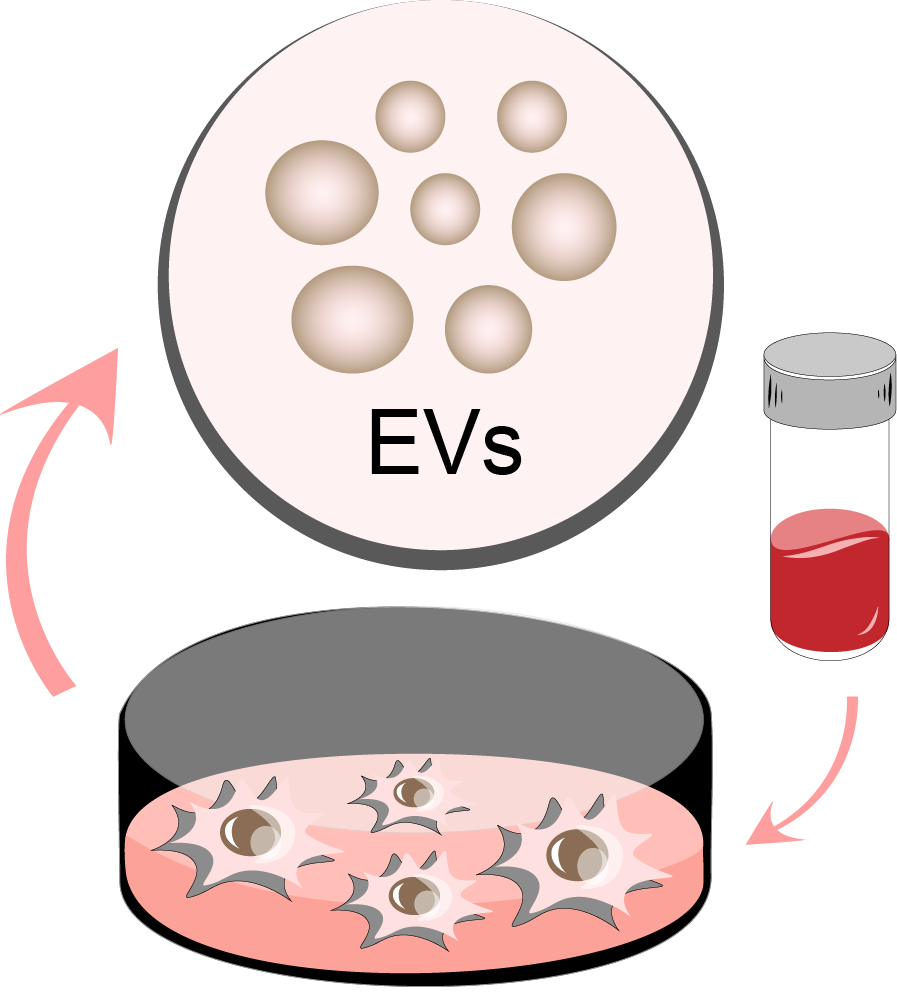
Among all paracrine factors and release molecules, cells also release extracellular vesicles (EVs). EVs arenatural nano/microcarriers composed of lipid bilayers. EVs contain physiologically active molecules such as growth factors and small nucleic acids and have been shown to influence the development of many diseases and tissue formation. 

MenSCs EVs were isolated and characterized and it was reported they are sufficient to repair rat intrauterine adhesion of embryo, as they effectively recovered the morphology, promoted regeneration and angiogenesis of the rat glands! Furthermore, MenSCs EVs were shown to resolve inflammation via induced M1-M2 macrophage polarization, enhanced

How do we collect and process MenSCs?

Menstrual blood is collected by the donors themselves using silicone cups. The collected blood is transported to the laboratory and cells are being isolated. When selecting donors, it is important to know whether the donor feels healthy or does not suffer from diseases that can change the properties of stem cells (for example, hematopoietic, oncological, autoimmune, genetic or other pathologies).

Read more…

Other criteria are age, hormonal imbalance, cycle characteristics, bad habits, etc. All women who agree to participate in the study are given a special personal consent form, which contains all the details of the study, they are asked to sign the consent and fill in the questionnaire. Donors’ personal information is not disclosed in the course of the research, publications or in other circumstances.

MenSCs are used in scientific purposes to study their ability to differentiate into various tissues (cartilage, bone, adipose tissue), their surface markers, secreted factors, extracellular vesicles (EVs), their properties are studied in different in vitro applications.

Let‘s investigate MenSCs together!

We invite you to contribute to scientific research by donating menstrual blood for the isolation of stem cells. The research will take place at Innovative Medicine Centre, Santariškių St. 5, in Vilnius.

Our team, who has many years of experience in the field of stem cells will take a good care of your cells and analyse their potential!

Participation is confidential and data will be processed according to the valid Bioethics permission (No. 158200-14-741)!

If you are interested, reach us out and we will provide additional information!

Team

We are a team of ambitious, goal-seeking researchers from Innovative medicine centre situated in Vilnius (Lithuania) who are dedicated, hardworking, and unwaveringly believe in the potent therapeutic capabilities of menstrual blood-derived stromal cells.